Permission and rules
Many locations are on private property. Enter a place only when it is permitted.

Urban exploring is the discovery and photography of abandoned places: buildings where use, time and nature have left their marks.
Learn what urbex involves, what to consider and how to set out well prepared.
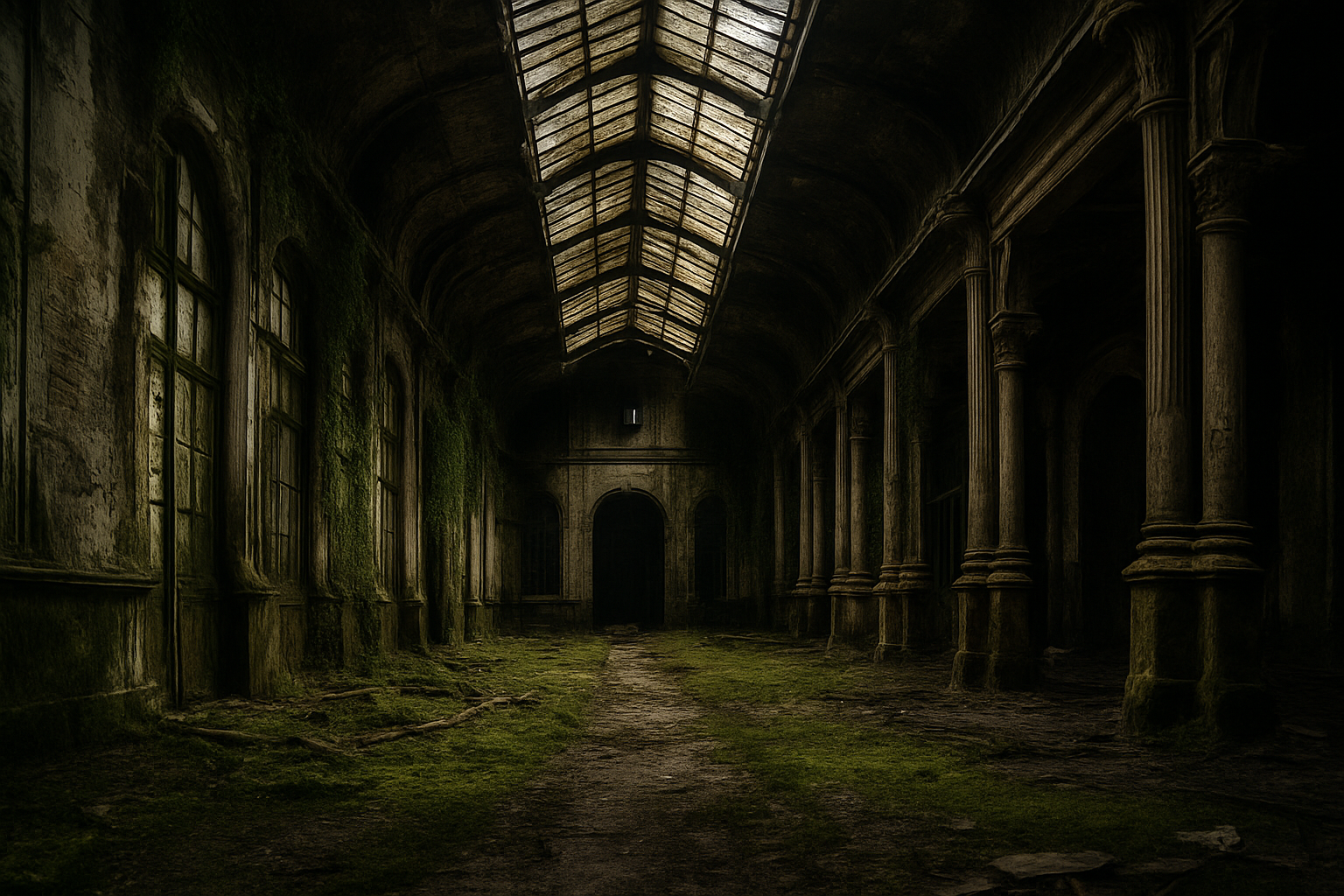
Urbex is not an attraction or a guided tour. It is the experience of a place that has lost its original purpose, but still contains traces of people, work and history.

Hospitals, factories, castles and schools are among the best-known urbex locations. Decay, old interiors and abandoned details show how a place was once used.
Light, silence and unexpected details make every location different. For many explorers, photography is the way to capture that atmosphere without changing anything about the place.
Leave nothing but footprints. Take nothing but pictures.
Abandoned does not automatically mean freely accessible or safe. Check the situation, respect property and comply with local laws and regulations.
Many locations are on private property. Enter a place only when it is permitted.
Weak floors, glass, openings, moisture and unstable sections can pose an immediate danger.
Let someone know where you are and preferably do not explore alone.
Do not damage or take anything, and do not force entry.

Check off the list before you leave. Your choices are stored only on this device and will remain when you reopen the page.

A closed entrance remains closed.
Decay is not an invitation to add more damage.
What you find belongs to the story of the place.
Take only your photographs and memories with you.

Choose a complete urbex map for a country or region, or buy only the individual location you need. The information is designed to be used clearly on your phone.

UrbexNow
Digital urbex maps, individual locations and upgrades for explorers across Europe. No subscription, just instant access to new possibilities.
© 2026 UrbexNow. All rights reserved.